
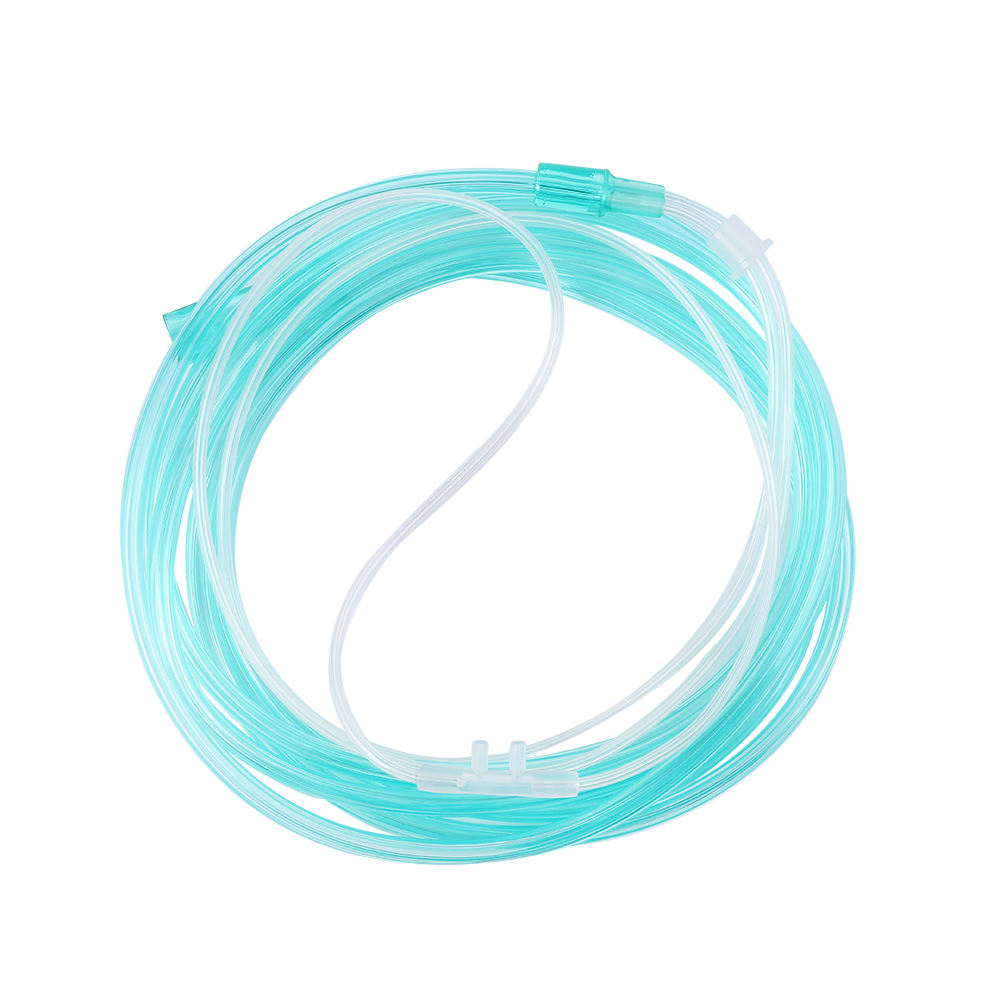
Nasal Oxygen Cannula
1. Soft, flared nasal prongs – The two short, curved prongs are made of soft, flexible PVC or silicone, with a flared or beveled tip design that comfortably fits into the nostrils without causing mucosal irritation or pressure sores. 2. Lightweight, kink-resistant tubing – The main supply tubing is thin, lightweight, and designed to resist kinking, allowing patient mobility during oxygen therapy. Tubing lengths typically range from 2.1 m to 7 m (7–21 ft) to accommodate bed or ambulatory use. 3. Adjustable elastic headband or ear-loop design – Most cannulas feature a slide-adjustable elastic band that wraps around the head or over-the-ear tubing loops, providing a secure, customizable fit for different face sizes and preventing accidental dislodgement. 4. Oxygen flow range 1–6 L/min – Designed for low-to-medium flow oxygen delivery (1–6 L/min), achieving FiO₂ approximately 24–44% depending on flow rate, respiratory rate, and tidal volume. Some high-flow nasal cannula (HFNC) systems extend to 60 L/min (different product category). 5. Universal tapered connector (Christmas tree type) – The distal end has a standard tapered, ridged connector that fits all common oxygen flow meters, humidifier bottles, and wall outlets, ensuring universal compatibility in hospital and home settings.
Specifications
| Size: | Adult/Child/Infant; |
Request Product Details & Pricing
Get comprehensive specifications, compliance documentation, and volume pricing for your procurement needs.
Shelf Life
3-5 years
Lead Time
After confirmed within 35days
Quality Control
COA, COO and other Documents accroding to the client's request
Customization Options
Logo on Label/ Pack/ Carton